Skip to content

Posts tagged ‘new york’

AM I INVISIBLE? NYC | SP : the Exhibition

Scenes from the exhibition and public art installation Am I Invisible? NYC | SP, in New York City and São Paulo, on view from September 15 – November 8, 2015.

Panel discussion at Centro Cultural São Paulo, September 15. Speaking is Nabil Bonduki, Chief of Cultural Affairs, SP

A projection of images submitted to the Am I Invisible? NYC | SP Open Call at the opening party at Delancey Plaza, September 15, 2015.

Panel discussion at Centro Cultural São Paulo, September 15. From left to right: (L-R) Nabil Bonduki (Chief of Cultural Affairs in São Paulo), Ignacio Aronovich (LostArt), Ronaldo Tonobohn (Department of Transportation), Anderson Augusto (6eMeia), Leonardo Delafuente (6eMeia) and Baixo Ribeiro (Instituto Choque Cultural). Speaking, Anderson Augusto of 6meia.

A visitor to the installation at Delancey Plaza, NYC, September 15, 2015. Works visible (L – R) Gustavo Gomes, Jessica Findley, David Horvitz, Bijari.

Wide view of Invisìvel? SP | NYC at Centro Cultural São Paulo. Works visible by (L – R) William Lamson, Jessica Findley

Visitors to Am I Invisible? NYC | SP October 10, 2015 look at works by Jessica Findley, Gustavo Gomes. Partially visible at extreme left, 6meia.

A visitor to Am I Invisible? NYC | SP takes a picture at Lomography Gallery, NYC, October 10. L-R: works by William Lamson, Hai Zhang.

Public art installation of Invisìvel? SP | NYC with work by William Lamson

Visitors to Am I Invisible? NYC | SP at Lomography Gallery, NYC, October 10, 2015

Public art installation of Invisìvel? SP | NYC with work by Jessica Findley


Modern Ruin – WORLD PREMIERE

Modern Ruin,  premiering at Queens Theatre on Friday, chronicles the rise and fall of the iconic New York State Pavilion. A landmark of the 1964 World’s Fair, it is now, alas, a magnificent ruin at Flushing Meadow Park. Highly visible from the Grand Central Parkway, the Long Island Expressway, and by air for those flying into or out of La Guardia or JFK airports, the Pavilion stands a sentinel to past optimism of the future which is today.

The movie opens with a hardy group of volunteers determined to help save the structure. It starts with small steps. Simple steps, such as painting the perimeter wall of the pavilion. Set against the scale of the structure cutting a modernistic, timeless silhouette against New York’s ever changing skyline, these simple gestures seem so out of scale—almost futile. Instead, it is the start of something larger.

The time of the World’s Fair was a period when technology was viewed as a key ingredient to building a better, brighter future—and the world was on display. New York State was ascendant.

[tentblogger-youtube 2-5aK0H05jk]

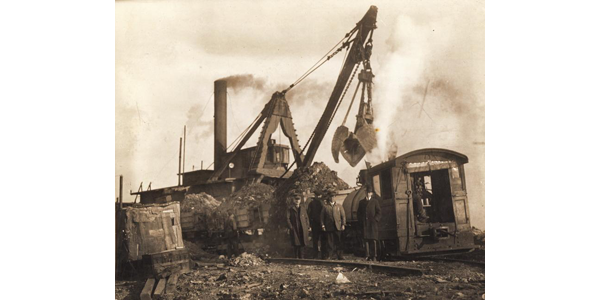
Writer/director Mathew Silva does a very nice job of taking the viewer on a tour of the site: its origins, as a landfill made infamous in the Great Gatsby, the role of this the Pavilion in the 1964 World’s Fair, the conversion of the fairgrounds to today’s Flushing Meadow Park, and its the Pavilion’s various uses since the Fair, including a period as a roller skating rink, and its eventual decline.
corona-ashes-dump


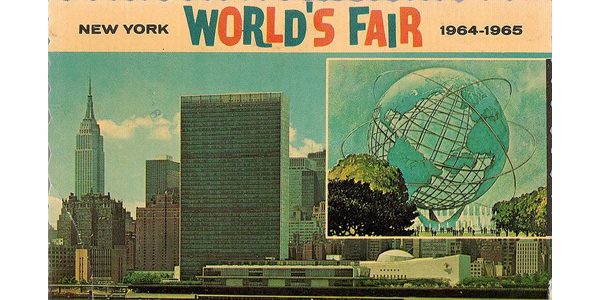
This evocative film resonated with me on several levels.I visited the 1964 World’s Fair as a youngster, on my first trip back to New York from Indiana, where I lived at that time.Visiting New York City was already exciting enough—but visiting the World’s Fair is like visiting the “center” of the center of the universe.


1964-NYC-postcard


I recall with wonder the many pavilions, monorail, sky rides—and even the fun of riding the Flushing Line (Number 7) train to the Fair. It was sensory overload for an impressionable young boy. The 1964 World’s Fair was a crucible where the excitement and energy of the world seemed to converge to produce a miraculous world full of vision of and almost unlimitless possibilities!


monorail-new-york-fair-postcard


Watching this documentary we learn of how the magnificent New York State Pavilion was allowed to fall into disrepair—neglect or the need to apply limited resources to deal with the more pressing, urban problems that characterized New York City in the late 1960’s and 1970’s. We also learn of an exciting adaptive reuse plan to convert the pavilion into an aviation and space museum—only to learn that it never came to fruition. Credit goes to Mr. Silva to not linger too much on nostalgia, or to engage in a blame game for why the structure fell into disrepair. But the savvy viewer can draw his or her own conclusions.

The question going forward is what will become of this structure? An engineering feat in its day, is it destined to become a permanent ruin akin to the Coliseum in Rome or Stonehenge? Or will there be a force for adaptive reuse which will eventually re-purpose the structure for use by future generations?

Which force will prevail?

[tentblogger-vimeo 109865370]

Modern Ruin: A World’s Fair Pavilion – WORLD PREMIERE

Friday, May 22, 2015 at 8:00PM

Queens Theatre

14 United Nations Avenue South

Flushing Meadows Corona Park, Queens

7 train to Mets-Willets Pt.

Tickets can be purchased here.

DocoMomo Tri-State is sponsoring transportation from Manhattan with a party bus.

Movie tickets and bus tickets are sold separately and can be purchased by following the links here.

Kenneth Lin, AICP is a Senior Planning Manager for a transportation consultancy based in New York City. Ken has a lifelong interest in architecture, urban planning and transportation, and has traveled to 128 countries on six continents.

Brooklyn, Geniuses Everywhere

When the change of the season comes to Brooklyn, the geniuses come out;  too many to name or even count. Drinking coffee, hurrying to the subway, taking a number at the butcher’s or standing on the sidewalk, staring down at who knows what. In coffices, geniuses come and go, plugged into devices pouring into their ears the soundtracks of their lives while they write the stories of their lives. Some of these stories are in color; some are in code.

Where ships once grew, now delicious things to eat sprout from the rooftop farms of shipyards, stadiums, on 596 acres and in garages. The harvest doesn’t travel far, turning up in nearby plates in exotic or comforting combinations dished out by arms with tattoos. The names of these morels and morsels combine two languages or more, or the names of dead geniuses.

 steamboat003

There is a building on Jay Street stuffed to the rafters with geniuses making the future. If you’re one of these, and your name is Robert Fulton, and the year is 1807, as the steam rolls off your morning cup of coffee you might say to yourself, “This would be a good way to push a boat around.” At the next table, if it were 1881 and if your name is Arbuckle, the future might appear to you in the form of roasted coffee beans packed ever so neatly in one-pound bags. In either case, you would be hanging around the same corner of Jay Street that you probably are right now.

coffee cup002-01 The first genius of Brooklyn was sugar. But even before that, there was the Dutch genius, and even before that, the genius of the Lenape.
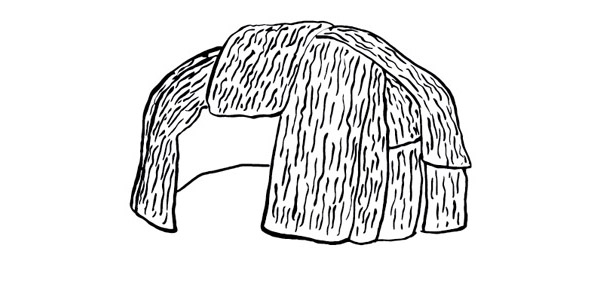
lenape house-01The Lenape’s Brooklyn was much like today: from one end to the other, an endless round of roving supper clubs where diners enjoyed only the most locally grown and seasonal of nightly feasts. In autumn, summer clambakes and fish fries in Coney Island gave way  to beaneries and bakeoffs in the fields of Gowanus.  With the first snow, the forests of Flatbush Extension smoked with barbecues of turkey and deer.

 The Lenape, in their genius, combined the lifestyle of the 1% with that of can-collecting residents of refrigerator boxes. The Lenape supper club was more like supper camp since the Lenape just set up a new house wherever dinner was to be served. They invented Bitcoin, which they called “sewan”, the only difference being that their Bitcoin was made not of one’s and zero’s contained in glowing boxes, but rather seashells mined during strolls along the sandy beaches of the wildly popular open-source operating system called Nature.

 For about 6,000 years, the scene was low-key but copacetic; one season rolling into the next much like the one before, when, one day, up floated the most unusual party boat the Lenape had ever seen. The men aboard were no less exotic, their unearthly pallor set off by dark clothes flashing with beautiful metal ornaments and, I mean, who wears a ruff?

Their boat was strewn with a collection of gadgets each one more entertaining than the last: exploding sticks that dropped a deer with one bang, steel axes and needles that cut effortlessly through wood and leather, and drinks that made your head feel first like it would burst into flames, then like it was floating 10 feet above the ground.

 The Dutch–who had been hoping to shorten the distance between Indonesian nutmeg, Japanese silver and Chinese porcelain and the docks and counting houses of London–looked with some surprise upon the Lenape and saw one thing: fur.

 For a while, the Lenape were the life of the party on both sides of the Atlantic; then the beaver, otter and mink ran out. At the same time, the value of their Bitcoin took a nosedive. To top things off, the Lenape realized they had been trading furs and sewan not only for guns and steel needles, but land.

Too late. They found themselves first in Canarsie, then Oklahoma.

Never mind that. The new genius in town was sugar. Without sugar, once New Netherlands had been emptied of fur, the Dutch would simply have sailed on to other spicier, silkier shores, and we would not now be growing on our rooftop farms the finer ingredients of the pancakes, waffles, doughnuts, coleslaw and pretzels we so enjoy at our barbecues, bean tosses and clam bakes in Greenpoint and Boswijk.
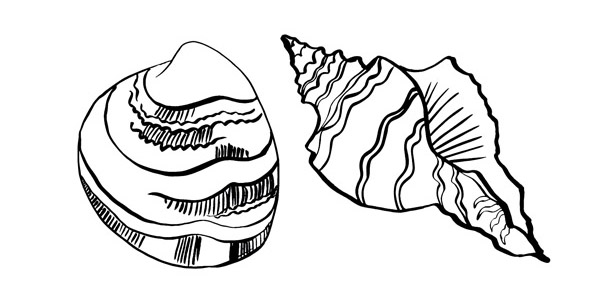
clam and quahog shells-01 War, war, war. European kings and queens, like so many Islamic fundamentalists and Neo-Cons, couldn’t get enough of it. Trying to escape the misery of the Seven Years War, the Thirty Years War, the War of the Roses not to mention the Hundred Years War, a flood of terrorized farmers fled hither and thither across blood-soaked France, Belgium, and Spain to England, from England to Scotland and back again. Where to go, where to hide?

If you could make it to Amsterdam, the Dutch West Indies Company was giving anyone willing to cross over the Atlantic a six-year lease on a Brooklyn homestead, equipped with house, barn, tools and farming implements, four horses, four cows, sheep and pigs, in exchange for nothing more than a promise to stay for six years and the return of one cow, 80 pounds of butter and $40 annually. French Huguenots, Calvinist Walloons, Palatinate Germans, Austrians, Danes, Swedes, Norwegians, Poles and Jews everywhere said, “Sign me up!”

dutch farmhouse003-01Thusly, in the matter of its glot, that of Brooklyn has always been markedly poly, the speakers of 18 languages turning up all at once with a few sewing needles and one suit of clothes, keen to plow the fields of Red Hook.
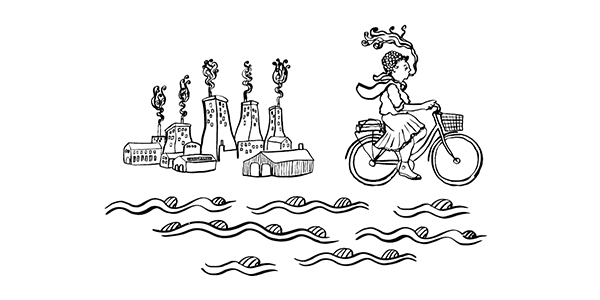
alice sugar + smoke-01Sugar was the dot-com boom, the Colombian cocaine trade, the subprime mortgage bubble of the 17th century. It combined the irrational exuberance and insatiable demand of the first two with new innovations in cruelty of the third.  Everybody wanted in, and adventurers from Denmark to Spain flocked to the Caribbean to get their piece of the smokiest, stickiest, tooth-rottingest get-rich-quick deal ever produced of pure human misery.

Once every inch of land between Florida and Brazil was covered with undulating fields of sugar cane, there remained the problem to feed, clothe and shelter the humans planting, harvesting and cracking the whip over it. The farms and forests of Brooklyn and Queens furnished the needed supplies. After the Molasses Act of 1733, the sending out of lumber and wheat, the taking in of barrels of molasses and lemons, limes, ginger, people and whatever else smugglers, pirates and other astute men of business, extract from the Caribbean to sell in London by way of New York transformed a street next to a wall into Wall Street.

Brooklyn settled down into a bucolic, homey kind of existence populated by farmers and woodcutters, brewers and distillers, herders and hunters, coffee drinkers and other inventors of the future–a place where one might turn one’s attention, uninterrupted by anything more disturbing than a ferry trip across the river to replenish the cigarette supply–to such pleasant pastimes as the decoding of the Rosetta Stone or the invention of free verse.

walt truman fultonlanding-01

 A minor genius, the Salieri to the Mozart that was sugar, was the Revolutionary War, during which New Yorkers–occupied by the British–continued to buy and sell, grow and trade, and especially,under the protection of the British fleet, come and go, rather than dragging cannons over one snowy mountain after another, feet covered with bloody rags. Among those coming were Africans slaves running from the freedom fighters, promised their freedom if only they would fight on the British side against their former owners. Although recognizing the distinct usefulness of a few slaves around the house, the store and the workshop, New Yorkers were disgusted by the vulgarity of owning dozens if not hundreds of slaves that characterized the plantation slavery system, which, perfected in the cane fields of the Caribbean,  proved so profitable in the cotton fields of the nascent democracy.

They also had  few objections to the purchase or inheritance of freedom, nor to worship nor literacy, baptism, or the owning of property on the part of African slaves from the time of the first Dutch settlers. By 1818, the Bridge Street African Methodist Episcopal Wesleyan Church had been founded on Bridge Street by blacks fed up with sitting in the back rows of white churches.

And this is how greatest American genius of all, contradiction, came to Brooklyn.

genius brochette-01

Am I Invisible? A Portrait of New York City Bicyclists Opens April 8

Untitled (Ghost Biker) Marina Berio
Am I Invisible? A Portrait of New York City Bicyclists

Opening April 8, 2014 6 – 9 p.m.

In the Great Room at The Old Stone House
Old Stone House & Washington Park
336 Third Street, bet. 4th/5th Avenues
Brooklyn, NY 11215

Directions

Am I Invisible? A Portrait of New York City Bicyclists is a transmedia project produced by Bicycle Utopia in collaboration with Recycle-a-Bicycle and The Old Stone House.

Am I Invisible? is a portrait of New York City viewed from a bicycling perspective. Artists Marina Berio, Christopher Cardinale, Jeanne Hilary, Johanna Kindvall, Sam Polcer, Justin Strauss Mike Taylor and Harry Zernike will be exhibited along with images from the Am I Invisible? Open Call, and images created during an Am I Invisible? Bike Art Party, a community event organized with Queens Museum. Am I Invisible? A Portrait of New York City Bicyclists will be on display at the Old Stone House and an interactive public art installation in locations around NYC from April 8 to June 3.

Am I Invisible? is inspired by the experience of biking in the city. Biking creates intimacy with the built environment, encourages social interactions and enhances awareness of New York City as an ever-evolving, collective cultural experience.

About the Artists

Marina Berio

Marina Berio is an artist and photographer. She has been granted a New York Foundation for the Arts fellowship, the Aaron Siskind Foundation Award and a Pollock/Krasner Grant, and been invited to various residencies including the MacDowell Colony, Yaddo, Millay, and Schloss Plüschow in Germany. She has exhibited photography and drawings internationally, including Michael Steinberg Fine Arts, Yancey Richardson Gallery, Von Lintel Gallery, Smack Mellon, and Artists Space in New York; Les Rencontres d’Arles, Galerie Camera Obscura, and the Centre Photographique de Pontault-Combault in France; her work has been published in Foam and Fantom. Berio is Chair of the General Studies Program at the International Center of Photography in New York City. She lives with photographer Jean-Christian Bourcart and their son Elio in Brooklyn, New York. More about Marina’s work at marinaberio.net

Christopher Cardinale

Christopher Cardinale is a cartoonist and muralist. While living in Guatemala and Mexico, his work was inspired by encampments of striking workers and anarchist punk collectives. He has been publishing comics since 2001 when his first graphic narrative appeared in World War 3 Illustrated Magazine. Since 1996, Christopher has led large-scale, collaborative mural projects in New Mexico, New York City, Italy, Greece and Mexico.His work addresses themes ranging from labor organizing history, cyclist and pedestrian rights, urban environmentalism and post-Katrina New Orleans. Christopher illustrated the graphic novel, Mr Mendoza’s Painbrush, by Luis Alberto Urrea, chosen by Kirkus Reviews as one of 2010’s best books for teens.

Johanna Kindvall

Johanna Kindvall is a designer, illustrator and architect based in Sweden and New York City. She editss a food blog, kokblog; her illustrations appeared in The Culinary Cyclist, by Anna Brones. Her illustrations have been published on blogs such as Art of Eating, Foodie Bugle and the books The Fabulous Baker Brothers. She is currently at work on a cookbook in collaboration with Anna Brones, which will be published by 10 speed press. Her work has been exhibited widely, notably in 14th St Overlay by Walczak & Heiss in Denver, Colorado, at the Triennial of Lövestad, Sweden, at the National Art Museum of China and others.

alex06_600-bw

Jeanne Hilary

Jeanne Hilary is a photographer and new media artist.  She is founder of Bicycle Utopia, a public art project about New York City seen from a bicycling perspective.

Her work has been exhibited widely, notably le Centre Pompidou, le Palais de Tokyo, Le Musée Carnavalet, la Bibliothèque Nationale, Paris; Lilit Kala Akademi, New Delhi, The Museum of Fine Arts, Calcutta,, the Museum for Contemporary Photography, Chicago. She has received numerous grants and residencies, among these: The American Center, Paris; the Fondation Regional Pour l’Art Contemporain, Ile de France; the Ministére des Affaires Etrangéres, France; the Palm Beach County Cultural Council; the Ministére de la Culture, France. Her work has been published in  The New York Times, The Guardian, La Repubblica, El Pais, Le Monde, Libération, le Nouvel Observateur, l’Express, Geo, Newsweek, Fortune and many others. Her work is broadly concerned with how the built environment impacts human endeavor, and how memory and desire inform contemporary society. She has worked extensively on gangs and youth issues in Chicago and Los Angeles,  women’s issues, infrastructure and housing, poverty and immigration in France’s housing estates, and a range of human rights and social issues in Egypt, Afghanistan, India, Turkey, China and Rwanda, throughout Europe and the United States. More about Jeanne Hilary at jeannehilary.com

Sam Polcer

Sam Polcer recently recently completed his first book, New York Bike Style, which will be published by Prestel in Spring 2014. (He also has a blog, Preferred Mode, that features some of the photos from that project.) His writing and photography has appeared in The New York TimesThe Wall Street JournalTravel + LeisureHemispheresBrooklyn MagazineThe L Magazine,  among others. He is Communications Manager of Bike New York. Previously, he was a nightclub visual designer, traveling circus spotlight operator, documentary filmmaker, DJ, video editor, blueberry picker, election campaigner and event producer. When he’s not riding his bike or traveling on assignment, he spends as much time as he can in Brooklyn, NY. More about Sam Polcer at Preferredmode.com

strauss

Justin Strauss

Justin Strauss, 16, from Forest Hills, Queens is a junior at Stuyvesant High School. Justin is photo editor for both The Spectator, Stuyvesant’s student run biweekly newspaper, and The Indicator, Stuyvesant’s yearbook. His interest in cycling began in 2012, after participating in bike tours in and around New York City. The following year, Justin joined the Century Road Club Association. He competes in road, track, and cyclocross races for the club’s Junior Development team. Justin saw the opportunity to combine his two defining interests in Bicycle Utopia’s Am I Invisible? contest and he plans to continue to experiment with using photography as a medium to capture the beauty of cycling.

Mike Taylor

Mike Taylor is a printmaker, painter, writer, self-publisher and arts educator. He works in screenprinting, painting, collage, sculpture and performance. His work is narrative and autobiographical, documenting his surroundings and reflecting on culture, politics, and the human condition. While self-publishing anthologies of his own artwork, comics and writing he is also an elementary school art teacher. 

Harry Zernike

Harry Zernike makes photographs and films for a broad range of commercial and editorial clients. His photographs are in a number of books as well as private, corporate, and museum collections. He has been spotted in road and cyclocross races, and toodling around New York on a single speed. A predisposition to photographing cyclists (conflating work and play) led him to publish the printed 9W- a journal of Cycling Photography and it’s online companion 9wmag.comwww.harryzernike.com

triple logos-01 copy

Am I Invisible? A Portrait of New York City Bicyclists is made possible with generous support from our sponsors.

AdoramaPix600

sponsors 600

A Bikestrian

bikestrian


This just in from artist Frédéric Lère:

“You could not miss me.

“Walking a Citibike from the art supply store to my studio. Should I use the sidewalk or the bike lane? I opted for the bike lane, smoother surface.

“All the way up 8th Avenue from 23rd to 38th Street. Respecting all the traffic lights and unruly pedestrians…

“I was special, a bikestrian.

“One of the unruly persons that I met was driving a Yellow cab. He cut me off, forcing me to use my brakes, as he turned left on 35th Street, running a red light.

“The driver was a cop in a uniform!?!”

You can see Frédéric’s The Freevolous King Lère Show at the Mayson Gallery, 254 Broome Street, New York, from January 22 to February 05.

Proceeds from the show benefit the Big Apple Circus Clown Care Unit.


A Visit to Bicycle Roots Bike Shop in Crown Heights

[tentblogger-vimeo 83435758]

What’s different about New York City from Central Illinois? Artist Kathy Creutzburg pays a visit to Joe, Nechama, Herschel and Steven at Bicycle Roots Bike Shop in Crown Heights, Brooklyn.


About this Sponsored Post

In addition to our regular content, we occasionally post special offers and promotions from our subscribers.

Chinese Delivery Man

chinese_takeout_sm

“The decorations hadn’t changed in years. On the wall was a giant red Double Happiness poster. The formica counter was cracked and repaired with duct tape. Overhead was a giant take out menu with vinyl numbers taped over the old prices. Fortune Garden was strictly take out only. There was no room to dine in even if someone wanted to.”

Author, playwright and screenwriter Isaac Ho has written a pulp thriller based on a series of murders of Chinese delivery men that took place in New York City in 2004. “It wasn’t a serial killer,” says Ho,  “It turned out to be a gang of kids who saw easy money: a Chinese guy, therefore he, and the people around him, probably don’t speak English very well, or at all, and are probably illegal, and so wouldn’t be too well-documented or protected by the legal system.  But once the arrests were made the story ended, the press stopped covering it. I wondered, what happened to the victims’ families?”

The story is told in both English and Chinese, highlighting the isolation the language barrier creates for the main characters.

fan yee shook lau

Told from the perspective of the family of the murdered man, the main actors in the story are poor working-class or illegal immigrant business-owners, for whom the crime itself is only the beginning of their troubles in a world made of trouble.

The novella’s deeply ironic perspective pokes fun at a host of TV drama clichés as it makes the case that the only thing worse than being invisible is to become visible.

Detective Jackson knew he had to let the other shoe drop. “As far as the police are concerned, it’s an open and shut case. We have all the proof we need. However, the District Attorney may plead them out rather than go to the trouble of a jury trial.” 

 “What?” 

 Detective Jackson tried to sum up the U.S. criminal justice system for Lau. “Judges love it when you make things easy for them. It’s kind of the American way.” 

 Now Lau was upset. “They’re not going to die for what they did to my son?”

“They’re minors. Even if convicted at trial they won’t get the death penalty.”

Lau composed himself and tried to put his thoughts into something the American detective could understand. “My youngest son tries to make me watch baseball but I don’t understand the rules. Difficult. Not simple. In China, when a person kills someone, they are put to death. Simple.”

The murder victim’s father, outraged by the legal system’s failure to deliver a justice he can understand, driven by grief, and guided by the incomprehension that comes with a 300-word English vocabulary, tries to save his son’s honor and prevent his family from falling into the abyss of poverty, homelessness and deportation that the crime, with its loss of one wage-earner and the delivery car, pushes them into.

The legal system’s betrayal is only the first in a series that leads Lau ever deeper into a conflict  that becomes exponentially more complex  as each person Lau encounters brings his or her fear and cultural values to it. His ultimate downfall involves a bicycle and two fateful Mets tickets to a game at Citifield.

“If you write this story from the investigating cop’s point of view, you’re free to move around, to talk to everyone, but if I’m following Lau, I only know what he knows; the investigation is the least interesting part of the story. I grew up watching TV with all these stereotypes–characters and storylines. This perspective imposed limitations that were challenging to me as a writer. In writing the story, I had to break my own stereotypes. The question becomes, what is he going to do about his son’s murder? How does his journey resolve?

Isaac Ho grew up in Rockland County in the 1970s. His parents were immigrants from different parts of China who met in the United States. Every Saturday the whole family drove to Chinatown to shop for groceries, pick up the Chinese newspapers and eat dim sum.

Growing up in white suburbs, where kids at school called him Bruce and Pearl Harbor, he learned to hide in plain sight–trying to fit in as much as possible with white friends, and consciously trying to repress his Chinese identity.

That changed when he came to New York City to study acting. He found himself bumping into all kinds of people, and connecting with an Asian arts community. But one of his teachers at NYU advised him against working on original plays by Asian Americans, saying, “Nobody takes ethnic theatre seriously. You’re going to waste your time on something that doesn’t matter.”

“In my other books, the politics are like a sledgehammer, but in this book it was sufficient to tell the story from Lau’s point of view, that’s enough of a political statement in itself.

“In my first book, The Repatriation of Henry Chin, the story is about a guy who goes on the run chased by an ICE agent. Someone who read the first completed draft said “You introduce the protagonist way too late,” which I didn’t understand because Henry Chin is introduced on the first page. He thought Henry was the evil Chinese guy, and the ICE agent was the knight in shining armor–we’re so used to seeing white male characters as heroes, “You really have to change this; it’s way out of balance.”

“So I reworked things to make it clearer that Henry, the Chinese guy, is the hero.

“I ran into the same kind of thing when I started working on the new book. A lot of people asked me,’Why would you write about a Chinese delivery guy? If you’re going to tell a story about someone like that, there has to be something special about him, he’s just too ordinary.’ But the opportunity that writing about Americans who also have an outsider identity provides is to look at how strange America is, instead of looking at it from an “insider” perspective.

“Recently I took a trip to China with my father. We were driving through a modern section of Shanghai and slipped into a little alley that was completely traditional, surrounded by all these enormous highrises and shopping centers. When I was growing up, my grandmother told us she lived a day’s boat ride upriver from Shanghai. I asked my father if we could visit that place, but he said no, it doesn’t exist anymore. It’s part of Shanghai now. The city has expanded so much it has just absorbed the surrounding villages and towns.”

Ho, who has lived in California for 20 years, experienced an even more intimate culture shock when he visited New York in 2012.

“When I came to visit New York City for the first time since 1998, I was shocked by how much it had changed: on the one hand, it was like slipping on an old skin, the heat and sticky clothes, eating from food carts, getting around on the subway–except I had to get used to the metro cards, instead of using tokens.

“On the other hand, Lower Manhattan and Chinatown is like a military zone, with all the barriers and the security around 1 Police Plaza, and forget about parking your car. A friend of mine who lives in Chinatown and works in Long Island City told me he uses his bike to get to and from work. “He said,  ‘Screw the subway, it’s much easier by bike.’

“Even Chinatown has changed: it’s not just Cantonese food now. When I went with my aunt we had Shanghai-ese food at  a dim sum place on Elizabeth St.”

Chinese Delivery Man

Isaac Ho, 2013

152 pages

Digital Fabulists


HD_IMG031_shuie_andrew_delivery_delay


 Photograph: Andrew Shuie, Am I Invisible? A Portrait of New York City Bicyclists, 2012


¡Vivan los Muertos! Day of the Dead Celebrations at la Casa Azul

paul lambertonArtist Paul Lambermont’s lifelong fascination with Mexica theology began when he was seven or eight years old and saw an image of the Mexica dipping their feet into pails of sap to makes boots for themselves. “How cool is that?”

This spectacular painting (“the figure is the size of a small child”) is part of the Vivan los Muertos exhibition currently on view at La Casa Azul. The piece is made of found paper, that has been sewn, stapled and painted.

The painting represents the God Xipe Totec, and is part of a series inspired by the Codex Borgia, the Codex Zouche Nuttal, and Tibetan Art which he calls The Codex Chitipati. “I am interested in the art and myths of many cultures and time periods. Despite separation of geography and time, images are constantly repeated.

“Xipe Totec is the God of Springtime and Vegetation. He is represented as having been flayed: the skin is removed so new life can come through. During the ritual devoted to him the priests wore the flayed skin of sacrificial victims. It’s sort of nice we don’t do stuff like that now–it would make us more paranoid than we are already.”

The Vivan los Muertos exhibition includes work by Claudia Corletto, Pablo Caviedes, Michael Guillen, Ramon Gutierrez, Antonio Pertuz, Vanessa Peters and Airy Quiroz, and a community altar in memory of the writer Oscar Hijuelos, who passed away in October of this year.

¡Vivan los Muertos at La Casa Azul on view from now to November 23.

La Casa Azul Bookstore 143 E. 103rd St 

Highlights From Last Week’s East Harlem Art and Culture BikeART Tour

[tentblogger-vimeo 83622121]

Great weather, great art, great food, site-specific spoken-word performances by JC Augustin, and wonderful music by Blue Maky at the East Harlem Harvest Festival were just some of the highlights of the BikeART tour on Saturday, October 27.

We’re looking forward to more of the same and just more on Saturday, November 2 for the Day of the Dead tour!

Sign up here!

October 27th East Harlem BikeART Tours: Play(LABS)!

baddermural

Muralist, graffiti and tattoo artist Badder Israel puts the finishing touches on “Yellow Brick Road” his tribute to the cultures of the Indians of the Americas–Maya, Inca, Aztec and Taino. The mural is part of Play(LABS), a public art installation in four East Harlem community gardens, organized by the West Harlem Art Fund and New York Restoration Project.

Join us on Sunday, October 27th on our bike tour! Starting from the East Harlem Café we’ll make stops at Play(LABS) and other art and culture locations, the East Harlem Harvest Festival. We’ll taste some great food, listen to some great music–it’s going to be a great day to be in Harlem!

Tours start at 10 am and 2 pm.

For more information, and to book a tour, go here.