Brooklyn, Geniuses Everywhere
When the change of the season comes to Brooklyn, the geniuses come out; too many to name or even count. Drinking coffee, hurrying to the subway, taking a number at the butcher’s or standing on the sidewalk, staring down at who knows what. In coffices, geniuses come and go, plugged into devices pouring into their ears the soundtracks of their lives while they write the stories of their lives. Some of these stories are in color; some are in code.
Where ships once grew, now delicious things to eat sprout from the rooftop farms of shipyards, stadiums, on 596 acres and in garages. The harvest doesn’t travel far, turning up in nearby plates in exotic or comforting combinations dished out by arms with tattoos. The names of these morels and morsels combine two languages or more, or the names of dead geniuses.

There is a building on Jay Street stuffed to the rafters with geniuses making the future. If you’re one of these, and your name is Robert Fulton, and the year is 1807, as the steam rolls off your morning cup of coffee you might say to yourself, “This would be a good way to push a boat around.” At the next table, if it were 1881 and if your name is Arbuckle, the future might appear to you in the form of roasted coffee beans packed ever so neatly in one-pound bags. In either case, you would be hanging around the same corner of Jay Street that you probably are right now.
 The first genius of Brooklyn was sugar. But even before that, there was the Dutch genius, and even before that, the genius of the Lenape.
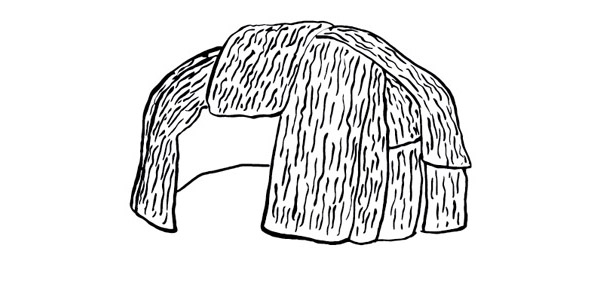 The Lenape’s Brooklyn was much like today: from one end to the other, an endless round of roving supper clubs where diners enjoyed only the most locally grown and seasonal of nightly feasts. In autumn, summer clambakes and fish fries in Coney Island gave way to beaneries and bakeoffs in the fields of Gowanus. With the first snow, the forests of Flatbush Extension smoked with barbecues of turkey and deer.
The Lenape, in their genius, combined the lifestyle of the 1% with that of can-collecting residents of refrigerator boxes. The Lenape supper club was more like supper camp since the Lenape just set up a new house wherever dinner was to be served. They invented Bitcoin, which they called “sewan”, the only difference being that their Bitcoin was made not of one’s and zero’s contained in glowing boxes, but rather seashells mined during strolls along the sandy beaches of the wildly popular open-source operating system called Nature.
For about 6,000 years, the scene was low-key but copacetic; one season rolling into the next much like the one before, when, one day, up floated the most unusual party boat the Lenape had ever seen. The men aboard were no less exotic, their unearthly pallor set off by dark clothes flashing with beautiful metal ornaments and, I mean, who wears a ruff?
Their boat was strewn with a collection of gadgets each one more entertaining than the last: exploding sticks that dropped a deer with one bang, steel axes and needles that cut effortlessly through wood and leather, and drinks that made your head feel first like it would burst into flames, then like it was floating 10 feet above the ground.
The Dutch–who had been hoping to shorten the distance between Indonesian nutmeg, Japanese silver and Chinese porcelain and the docks and counting houses of London–looked with some surprise upon the Lenape and saw one thing: fur.
For a while, the Lenape were the life of the party on both sides of the Atlantic; then the beaver, otter and mink ran out. At the same time, the value of their Bitcoin took a nosedive. To top things off, the Lenape realized they had been trading furs and sewan not only for guns and steel needles, but land.
Too late. They found themselves first in Canarsie, then Oklahoma.
Never mind that. The new genius in town was sugar. Without sugar, once New Netherlands had been emptied of fur, the Dutch would simply have sailed on to other spicier, silkier shores, and we would not now be growing on our rooftop farms the finer ingredients of the pancakes, waffles, doughnuts, coleslaw and pretzels we so enjoy at our barbecues, bean tosses and clam bakes in Greenpoint and Boswijk.
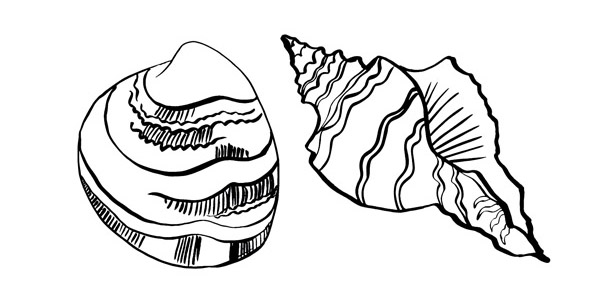 War, war, war. European kings and queens, like so many Islamic fundamentalists and Neo-Cons, couldn’t get enough of it. Trying to escape the misery of the Seven Years War, the Thirty Years War, the War of the Roses not to mention the Hundred Years War, a flood of terrorized farmers fled hither and thither across blood-soaked France, Belgium, and Spain to England, from England to Scotland and back again. Where to go, where to hide?
If you could make it to Amsterdam, the Dutch West Indies Company was giving anyone willing to cross over the Atlantic a six-year lease on a Brooklyn homestead, equipped with house, barn, tools and farming implements, four horses, four cows, sheep and pigs, in exchange for nothing more than a promise to stay for six years and the return of one cow, 80 pounds of butter and $40 annually. French Huguenots, Calvinist Walloons, Palatinate Germans, Austrians, Danes, Swedes, Norwegians, Poles and Jews everywhere said, “Sign me up!”
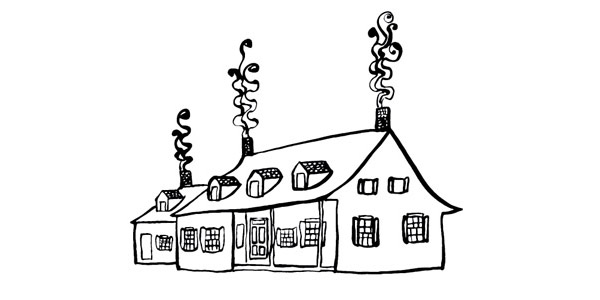 Thusly, in the matter of its glot, that of Brooklyn has always been markedly poly, the speakers of 18 languages turning up all at once with a few sewing needles and one suit of clothes, keen to plow the fields of Red Hook.
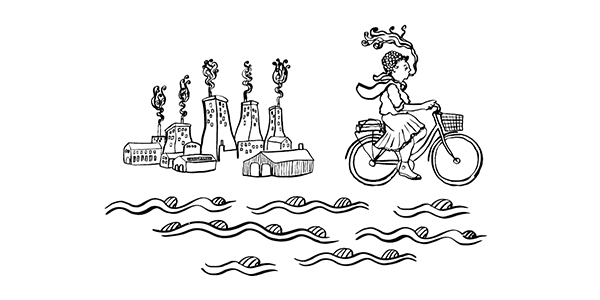 Sugar was the dot-com boom, the Colombian cocaine trade, the subprime mortgage bubble of the 17th century. It combined the irrational exuberance and insatiable demand of the first two with new innovations in cruelty of the third. Everybody wanted in, and adventurers from Denmark to Spain flocked to the Caribbean to get their piece of the smokiest, stickiest, tooth-rottingest get-rich-quick deal ever produced of pure human misery.
Once every inch of land between Florida and Brazil was covered with undulating fields of sugar cane, there remained the problem to feed, clothe and shelter the humans planting, harvesting and cracking the whip over it. The farms and forests of Brooklyn and Queens furnished the needed supplies. After the Molasses Act of 1733, the sending out of lumber and wheat, the taking in of barrels of molasses and lemons, limes, ginger, people and whatever else smugglers, pirates and other astute men of business, extract from the Caribbean to sell in London by way of New York transformed a street next to a wall into Wall Street.
Brooklyn settled down into a bucolic, homey kind of existence populated by farmers and woodcutters, brewers and distillers, herders and hunters, coffee drinkers and other inventors of the future–a place where one might turn one’s attention, uninterrupted by anything more disturbing than a ferry trip across the river to replenish the cigarette supply–to such pleasant pastimes as the decoding of the Rosetta Stone or the invention of free verse.

A minor genius, the Salieri to the Mozart that was sugar, was the Revolutionary War, during which New Yorkers–occupied by the British–continued to buy and sell, grow and trade, and especially,under the protection of the British fleet, come and go, rather than dragging cannons over one snowy mountain after another, feet covered with bloody rags. Among those coming were Africans slaves running from the freedom fighters, promised their freedom if only they would fight on the British side against their former owners. Although recognizing the distinct usefulness of a few slaves around the house, the store and the workshop, New Yorkers were disgusted by the vulgarity of owning dozens if not hundreds of slaves that characterized the plantation slavery system, which, perfected in the cane fields of the Caribbean, proved so profitable in the cotton fields of the nascent democracy.
They also had few objections to the purchase or inheritance of freedom, nor to worship nor literacy, baptism, or the owning of property on the part of African slaves from the time of the first Dutch settlers. By 1818, the Bridge Street African Methodist Episcopal Wesleyan Church had been founded on Bridge Street by blacks fed up with sitting in the back rows of white churches.
And this is how greatest American genius of all, contradiction, came to Brooklyn.


