Skip to content

Posts from the ‘Art’ Category

Am I Invisible? A Portrait of New York City Bicyclists Opens April 8

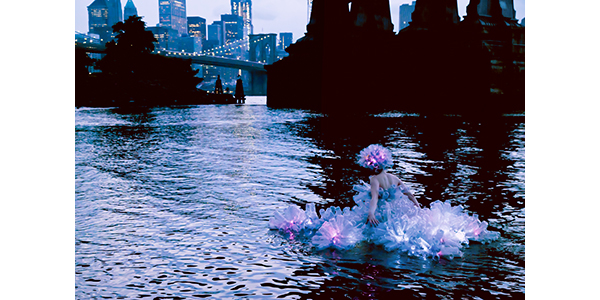
Untitled (Ghost Biker) Marina Berio
Am I Invisible? A Portrait of New York City Bicyclists

Opening April 8, 2014 6 – 9 p.m.

In the Great Room at The Old Stone House
Old Stone House & Washington Park
336 Third Street, bet. 4th/5th Avenues
Brooklyn, NY 11215

Directions

Am I Invisible? A Portrait of New York City Bicyclists is a transmedia project produced by Bicycle Utopia in collaboration with Recycle-a-Bicycle and The Old Stone House.

Am I Invisible? is a portrait of New York City viewed from a bicycling perspective. Artists Marina Berio, Christopher Cardinale, Jeanne Hilary, Johanna Kindvall, Sam Polcer, Justin Strauss Mike Taylor and Harry Zernike will be exhibited along with images from the Am I Invisible? Open Call, and images created during an Am I Invisible? Bike Art Party, a community event organized with Queens Museum. Am I Invisible? A Portrait of New York City Bicyclists will be on display at the Old Stone House and an interactive public art installation in locations around NYC from April 8 to June 3.

Am I Invisible? is inspired by the experience of biking in the city. Biking creates intimacy with the built environment, encourages social interactions and enhances awareness of New York City as an ever-evolving, collective cultural experience.

About the Artists

Marina Berio

Marina Berio is an artist and photographer. She has been granted a New York Foundation for the Arts fellowship, the Aaron Siskind Foundation Award and a Pollock/Krasner Grant, and been invited to various residencies including the MacDowell Colony, Yaddo, Millay, and Schloss Plüschow in Germany. She has exhibited photography and drawings internationally, including Michael Steinberg Fine Arts, Yancey Richardson Gallery, Von Lintel Gallery, Smack Mellon, and Artists Space in New York; Les Rencontres d’Arles, Galerie Camera Obscura, and the Centre Photographique de Pontault-Combault in France; her work has been published in Foam and Fantom. Berio is Chair of the General Studies Program at the International Center of Photography in New York City. She lives with photographer Jean-Christian Bourcart and their son Elio in Brooklyn, New York. More about Marina’s work at marinaberio.net

Christopher Cardinale

Christopher Cardinale is a cartoonist and muralist. While living in Guatemala and Mexico, his work was inspired by encampments of striking workers and anarchist punk collectives. He has been publishing comics since 2001 when his first graphic narrative appeared in World War 3 Illustrated Magazine. Since 1996, Christopher has led large-scale, collaborative mural projects in New Mexico, New York City, Italy, Greece and Mexico.His work addresses themes ranging from labor organizing history, cyclist and pedestrian rights, urban environmentalism and post-Katrina New Orleans. Christopher illustrated the graphic novel, Mr Mendoza’s Painbrush, by Luis Alberto Urrea, chosen by Kirkus Reviews as one of 2010’s best books for teens.

Johanna Kindvall

Johanna Kindvall is a designer, illustrator and architect based in Sweden and New York City. She editss a food blog, kokblog; her illustrations appeared in The Culinary Cyclist, by Anna Brones. Her illustrations have been published on blogs such as Art of Eating, Foodie Bugle and the books The Fabulous Baker Brothers. She is currently at work on a cookbook in collaboration with Anna Brones, which will be published by 10 speed press. Her work has been exhibited widely, notably in 14th St Overlay by Walczak & Heiss in Denver, Colorado, at the Triennial of Lövestad, Sweden, at the National Art Museum of China and others.

alex06_600-bw

Jeanne Hilary

Jeanne Hilary is a photographer and new media artist.  She is founder of Bicycle Utopia, a public art project about New York City seen from a bicycling perspective.

Her work has been exhibited widely, notably le Centre Pompidou, le Palais de Tokyo, Le Musée Carnavalet, la Bibliothèque Nationale, Paris; Lilit Kala Akademi, New Delhi, The Museum of Fine Arts, Calcutta,, the Museum for Contemporary Photography, Chicago. She has received numerous grants and residencies, among these: The American Center, Paris; the Fondation Regional Pour l’Art Contemporain, Ile de France; the Ministére des Affaires Etrangéres, France; the Palm Beach County Cultural Council; the Ministére de la Culture, France. Her work has been published in  The New York Times, The Guardian, La Repubblica, El Pais, Le Monde, Libération, le Nouvel Observateur, l’Express, Geo, Newsweek, Fortune and many others. Her work is broadly concerned with how the built environment impacts human endeavor, and how memory and desire inform contemporary society. She has worked extensively on gangs and youth issues in Chicago and Los Angeles,  women’s issues, infrastructure and housing, poverty and immigration in France’s housing estates, and a range of human rights and social issues in Egypt, Afghanistan, India, Turkey, China and Rwanda, throughout Europe and the United States. More about Jeanne Hilary at jeannehilary.com

Sam Polcer

Sam Polcer recently recently completed his first book, New York Bike Style, which will be published by Prestel in Spring 2014. (He also has a blog, Preferred Mode, that features some of the photos from that project.) His writing and photography has appeared in The New York TimesThe Wall Street JournalTravel + LeisureHemispheresBrooklyn MagazineThe L Magazine,  among others. He is Communications Manager of Bike New York. Previously, he was a nightclub visual designer, traveling circus spotlight operator, documentary filmmaker, DJ, video editor, blueberry picker, election campaigner and event producer. When he’s not riding his bike or traveling on assignment, he spends as much time as he can in Brooklyn, NY. More about Sam Polcer at Preferredmode.com

strauss

Justin Strauss

Justin Strauss, 16, from Forest Hills, Queens is a junior at Stuyvesant High School. Justin is photo editor for both The Spectator, Stuyvesant’s student run biweekly newspaper, and The Indicator, Stuyvesant’s yearbook. His interest in cycling began in 2012, after participating in bike tours in and around New York City. The following year, Justin joined the Century Road Club Association. He competes in road, track, and cyclocross races for the club’s Junior Development team. Justin saw the opportunity to combine his two defining interests in Bicycle Utopia’s Am I Invisible? contest and he plans to continue to experiment with using photography as a medium to capture the beauty of cycling.

Mike Taylor

Mike Taylor is a printmaker, painter, writer, self-publisher and arts educator. He works in screenprinting, painting, collage, sculpture and performance. His work is narrative and autobiographical, documenting his surroundings and reflecting on culture, politics, and the human condition. While self-publishing anthologies of his own artwork, comics and writing he is also an elementary school art teacher. 

Harry Zernike

Harry Zernike makes photographs and films for a broad range of commercial and editorial clients. His photographs are in a number of books as well as private, corporate, and museum collections. He has been spotted in road and cyclocross races, and toodling around New York on a single speed. A predisposition to photographing cyclists (conflating work and play) led him to publish the printed 9W- a journal of Cycling Photography and it’s online companion 9wmag.comwww.harryzernike.com

triple logos-01 copy

Am I Invisible? A Portrait of New York City Bicyclists is made possible with generous support from our sponsors.

AdoramaPix600

sponsors 600

A Bikestrian

bikestrian


This just in from artist Frédéric Lère:

“You could not miss me.

“Walking a Citibike from the art supply store to my studio. Should I use the sidewalk or the bike lane? I opted for the bike lane, smoother surface.

“All the way up 8th Avenue from 23rd to 38th Street. Respecting all the traffic lights and unruly pedestrians…

“I was special, a bikestrian.

“One of the unruly persons that I met was driving a Yellow cab. He cut me off, forcing me to use my brakes, as he turned left on 35th Street, running a red light.

“The driver was a cop in a uniform!?!”

You can see Frédéric’s The Freevolous King Lère Show at the Mayson Gallery, 254 Broome Street, New York, from January 22 to February 05.

Proceeds from the show benefit the Big Apple Circus Clown Care Unit.


Chinese Delivery Man

chinese_takeout_sm

“The decorations hadn’t changed in years. On the wall was a giant red Double Happiness poster. The formica counter was cracked and repaired with duct tape. Overhead was a giant take out menu with vinyl numbers taped over the old prices. Fortune Garden was strictly take out only. There was no room to dine in even if someone wanted to.”

Author, playwright and screenwriter Isaac Ho has written a pulp thriller based on a series of murders of Chinese delivery men that took place in New York City in 2004. “It wasn’t a serial killer,” says Ho,  “It turned out to be a gang of kids who saw easy money: a Chinese guy, therefore he, and the people around him, probably don’t speak English very well, or at all, and are probably illegal, and so wouldn’t be too well-documented or protected by the legal system.  But once the arrests were made the story ended, the press stopped covering it. I wondered, what happened to the victims’ families?”

The story is told in both English and Chinese, highlighting the isolation the language barrier creates for the main characters.

fan yee shook lau

Told from the perspective of the family of the murdered man, the main actors in the story are poor working-class or illegal immigrant business-owners, for whom the crime itself is only the beginning of their troubles in a world made of trouble.

The novella’s deeply ironic perspective pokes fun at a host of TV drama clichés as it makes the case that the only thing worse than being invisible is to become visible.

Detective Jackson knew he had to let the other shoe drop. “As far as the police are concerned, it’s an open and shut case. We have all the proof we need. However, the District Attorney may plead them out rather than go to the trouble of a jury trial.” 

 “What?” 

 Detective Jackson tried to sum up the U.S. criminal justice system for Lau. “Judges love it when you make things easy for them. It’s kind of the American way.” 

 Now Lau was upset. “They’re not going to die for what they did to my son?”

“They’re minors. Even if convicted at trial they won’t get the death penalty.”

Lau composed himself and tried to put his thoughts into something the American detective could understand. “My youngest son tries to make me watch baseball but I don’t understand the rules. Difficult. Not simple. In China, when a person kills someone, they are put to death. Simple.”

The murder victim’s father, outraged by the legal system’s failure to deliver a justice he can understand, driven by grief, and guided by the incomprehension that comes with a 300-word English vocabulary, tries to save his son’s honor and prevent his family from falling into the abyss of poverty, homelessness and deportation that the crime, with its loss of one wage-earner and the delivery car, pushes them into.

The legal system’s betrayal is only the first in a series that leads Lau ever deeper into a conflict  that becomes exponentially more complex  as each person Lau encounters brings his or her fear and cultural values to it. His ultimate downfall involves a bicycle and two fateful Mets tickets to a game at Citifield.

“If you write this story from the investigating cop’s point of view, you’re free to move around, to talk to everyone, but if I’m following Lau, I only know what he knows; the investigation is the least interesting part of the story. I grew up watching TV with all these stereotypes–characters and storylines. This perspective imposed limitations that were challenging to me as a writer. In writing the story, I had to break my own stereotypes. The question becomes, what is he going to do about his son’s murder? How does his journey resolve?

Isaac Ho grew up in Rockland County in the 1970s. His parents were immigrants from different parts of China who met in the United States. Every Saturday the whole family drove to Chinatown to shop for groceries, pick up the Chinese newspapers and eat dim sum.

Growing up in white suburbs, where kids at school called him Bruce and Pearl Harbor, he learned to hide in plain sight–trying to fit in as much as possible with white friends, and consciously trying to repress his Chinese identity.

That changed when he came to New York City to study acting. He found himself bumping into all kinds of people, and connecting with an Asian arts community. But one of his teachers at NYU advised him against working on original plays by Asian Americans, saying, “Nobody takes ethnic theatre seriously. You’re going to waste your time on something that doesn’t matter.”

“In my other books, the politics are like a sledgehammer, but in this book it was sufficient to tell the story from Lau’s point of view, that’s enough of a political statement in itself.

“In my first book, The Repatriation of Henry Chin, the story is about a guy who goes on the run chased by an ICE agent. Someone who read the first completed draft said “You introduce the protagonist way too late,” which I didn’t understand because Henry Chin is introduced on the first page. He thought Henry was the evil Chinese guy, and the ICE agent was the knight in shining armor–we’re so used to seeing white male characters as heroes, “You really have to change this; it’s way out of balance.”

“So I reworked things to make it clearer that Henry, the Chinese guy, is the hero.

“I ran into the same kind of thing when I started working on the new book. A lot of people asked me,’Why would you write about a Chinese delivery guy? If you’re going to tell a story about someone like that, there has to be something special about him, he’s just too ordinary.’ But the opportunity that writing about Americans who also have an outsider identity provides is to look at how strange America is, instead of looking at it from an “insider” perspective.

“Recently I took a trip to China with my father. We were driving through a modern section of Shanghai and slipped into a little alley that was completely traditional, surrounded by all these enormous highrises and shopping centers. When I was growing up, my grandmother told us she lived a day’s boat ride upriver from Shanghai. I asked my father if we could visit that place, but he said no, it doesn’t exist anymore. It’s part of Shanghai now. The city has expanded so much it has just absorbed the surrounding villages and towns.”

Ho, who has lived in California for 20 years, experienced an even more intimate culture shock when he visited New York in 2012.

“When I came to visit New York City for the first time since 1998, I was shocked by how much it had changed: on the one hand, it was like slipping on an old skin, the heat and sticky clothes, eating from food carts, getting around on the subway–except I had to get used to the metro cards, instead of using tokens.

“On the other hand, Lower Manhattan and Chinatown is like a military zone, with all the barriers and the security around 1 Police Plaza, and forget about parking your car. A friend of mine who lives in Chinatown and works in Long Island City told me he uses his bike to get to and from work. “He said,  ‘Screw the subway, it’s much easier by bike.’

“Even Chinatown has changed: it’s not just Cantonese food now. When I went with my aunt we had Shanghai-ese food at  a dim sum place on Elizabeth St.”

Chinese Delivery Man

Isaac Ho, 2013

152 pages

Digital Fabulists


HD_IMG031_shuie_andrew_delivery_delay


 Photograph: Andrew Shuie, Am I Invisible? A Portrait of New York City Bicyclists, 2012


¡Vivan los Muertos! Day of the Dead Celebrations at la Casa Azul

paul lambertonArtist Paul Lambermont’s lifelong fascination with Mexica theology began when he was seven or eight years old and saw an image of the Mexica dipping their feet into pails of sap to makes boots for themselves. “How cool is that?”

This spectacular painting (“the figure is the size of a small child”) is part of the Vivan los Muertos exhibition currently on view at La Casa Azul. The piece is made of found paper, that has been sewn, stapled and painted.

The painting represents the God Xipe Totec, and is part of a series inspired by the Codex Borgia, the Codex Zouche Nuttal, and Tibetan Art which he calls The Codex Chitipati. “I am interested in the art and myths of many cultures and time periods. Despite separation of geography and time, images are constantly repeated.

“Xipe Totec is the God of Springtime and Vegetation. He is represented as having been flayed: the skin is removed so new life can come through. During the ritual devoted to him the priests wore the flayed skin of sacrificial victims. It’s sort of nice we don’t do stuff like that now–it would make us more paranoid than we are already.”

The Vivan los Muertos exhibition includes work by Claudia Corletto, Pablo Caviedes, Michael Guillen, Ramon Gutierrez, Antonio Pertuz, Vanessa Peters and Airy Quiroz, and a community altar in memory of the writer Oscar Hijuelos, who passed away in October of this year.

¡Vivan los Muertos at La Casa Azul on view from now to November 23.

La Casa Azul Bookstore 143 E. 103rd St 

Highlights From Last Week’s East Harlem Art and Culture BikeART Tour

[tentblogger-vimeo 83622121]

Great weather, great art, great food, site-specific spoken-word performances by JC Augustin, and wonderful music by Blue Maky at the East Harlem Harvest Festival were just some of the highlights of the BikeART tour on Saturday, October 27.

We’re looking forward to more of the same and just more on Saturday, November 2 for the Day of the Dead tour!

Sign up here!

October 27th East Harlem BikeART Tours: Play(LABS)!

baddermural

Muralist, graffiti and tattoo artist Badder Israel puts the finishing touches on “Yellow Brick Road” his tribute to the cultures of the Indians of the Americas–Maya, Inca, Aztec and Taino. The mural is part of Play(LABS), a public art installation in four East Harlem community gardens, organized by the West Harlem Art Fund and New York Restoration Project.

Join us on Sunday, October 27th on our bike tour! Starting from the East Harlem Café we’ll make stops at Play(LABS) and other art and culture locations, the East Harlem Harvest Festival. We’ll taste some great food, listen to some great music–it’s going to be a great day to be in Harlem!

Tours start at 10 am and 2 pm.

For more information, and to book a tour, go here.

What’s a Girl to Do?

Bat for Lashes at Webster Hall August 30!

[tentblogger-youtube EICkZWEzFGE]

The amazing Natasha Khan pulling a hair light with a cargo bike accompanied by a cohort of BMXers wearing animal masks in a forest at visual effects of viagra night–wait VolumePills, I feel faint. I have to sit down for a minute.

webster hall map

Here’s Mom, the stunning Salma Agha rocking it Qawwali style in the biggest of big finishes in Salma in 1985.

[tentblogger-youtube cHNNMft7SG8]

One More Week to Summer Streets!

We can’t wait! For more information, go xanax prescription here

Park Ave Jeff Prant

Park Ave, Jeff Prant, photographer

SS_EventMap_2013B

Brooklyn International Performance Art Festival : La Pocha Nostra

[tentblogger-youtube 3oi2LWdsNHk]

Last Friday, Bicycle Utopia  and Get Up and Ride set out to prove that bikes and art can totally coexist in harmony.

To be honest, we weren’t really expecting an argument.

We are relatively certain that cycling is the best way to explore just about anywhere, and to tap into interesting arts and culture in NYC and beyond.

First, we had fine belgian beer, salads, wings, and made friends with an astoundingly disproportionate number of Dutch people at 983 – Bushwick’s living room. Then, we took a brief ride up Broadway to the elegant and truly graceful Grace Exhibition Space where Corpo Insurrecto: Psycho-Magic Actions for  a World Gone Wrong (“La Pocha Nostra’s newest experiment in ‘corporeal transformations.“)  was just starting.

The self-described ‘bizarre experiment’ sampled classic performance art tropes deployed via a ritualistic baroque aesthetic in which the extremely good-natured audience participated, or not, throughout the course of a cheapest generic cialis three-hour shifting installation involving multiple mise-en-scène, magnificent costumes, multiple naked people, a dead animal and multi-national branded acupuncture.

The performance was part of the Brooklyn International Performance Art Festival, which continues through July 28 at venues around Brooklyn. Conceived as a mass performance, the festival brings together artists, curators, critics, gallery directors and cultural organizers working together to ‘perform’ a festival as festival and commentary on the “festival.”

We loved it, and we think Mr. Artaud would have loved it, too. The art was amazing, and the great company made it all the better.

In fact, it was such a hit we plan to do it all again this week.

Join us next Friday for more food, drinks, bikes, and art!

We’ll meet at7:30pm at Skytown in Bushwick, then at 9pm we’ll cycle over to Grace Exhibition Space for more performance with the BIPAF!

RSVP here


skytown map


Lumen Video and Performance Festival 2013

If you aren’t going to make it to the Venice Biennale this year (I knew I should have reserved that hotel room 18 months ago), on June 15 you can see a piece of it on Staten Island at Lumen, one of New York City’s most anticipated art events of the summer.

Dominique_Paul_Migrations-of-the-Arthropods-series-Ready-to-Float_2012_courtesy-of-artist

Among the fifty artists exhibiting video and performance art projected in and around Lyons Pool is Jose Carlos Casado, whose Off was shown in May for the opening of the Biennale. Also of note at Lumen this year, Scott Van Campen’s Cicada Machine, work by Margaret Cogswell, , Yorgo Alexopoulos, the amazing Jonathan Ehrenberg, DD’s re-animation of It Came From Beneath the Sea.

It_Came_From_Beneath_The_Sea_poster

Curated this year by David C. Terry and Esther Neff, Lumen is a chance to see an eclectic collection of video and performance art from around the world in the magical atmosphere that is Staten Island By Night.

Any excuse to take the Staten Island Ferry is fine with me valium abuse, whose battered steel and pale-blue fiberglass interiors affords the opportunity to revisit childhood memories of amorous mosquitoes and burnt hot-dogs and marshmallows, not to mention a quick spin on one of the swivel chairs in the mirrored foyer of the women’s bathroom.  And for what glamour of a Broadway first night or cinq à sept are we preparing ourselves for in the middle of New York Bay?

Staten Island is home to not only Lumen, but some of the city’s most intriguing museums, such as the Alice Austen House  and the Jacques Marchais Museum of Tibetan Art. The first is a house that is a museum, the second is a museum in a house designed to resemble a Tibetan monastery.

Enter at the lower level of the Staten Island Ferry if you are coming by bike. Bike valet parking is available at Lumen. For directions, and an overview of some of the other cultural destinations on Staten Island, click on the map below to download the printable pdf.

staten_island_cultural_map_inset