Skip to content

Posts from the ‘Bicycle Style’ Category

AM I INVISIBLE? NYC | SP : the Exhibition

Scenes from the exhibition and public art installation Am I Invisible? NYC | SP, in New York City and São Paulo, on view from September 15 – November 8, 2015.

Panel discussion at Centro Cultural São Paulo, September 15. Speaking is Nabil Bonduki, Chief of Cultural Affairs, SP

A projection of images submitted to the Am I Invisible? NYC | SP Open Call at the opening party at Delancey Plaza, September 15, 2015.

Panel discussion at Centro Cultural São Paulo, September 15. From left to right: (L-R) Nabil Bonduki (Chief of Cultural Affairs in São Paulo), Ignacio Aronovich (LostArt), Ronaldo Tonobohn (Department of Transportation), Anderson Augusto (6eMeia), Leonardo Delafuente (6eMeia) and Baixo Ribeiro (Instituto Choque Cultural). Speaking, Anderson Augusto of 6meia.

A visitor to the installation at Delancey Plaza, NYC, September 15, 2015. Works visible (L – R) Gustavo Gomes, Jessica Findley, David Horvitz, Bijari.

Wide view of Invisìvel? SP | NYC at Centro Cultural São Paulo. Works visible by (L – R) William Lamson, Jessica Findley

Visitors to Am I Invisible? NYC | SP October 10, 2015 look at works by Jessica Findley, Gustavo Gomes. Partially visible at extreme left, 6meia.

A visitor to Am I Invisible? NYC | SP takes a picture at Lomography Gallery, NYC, October 10. L-R: works by William Lamson, Hai Zhang.

Public art installation of Invisìvel? SP | NYC with work by William Lamson

Visitors to Am I Invisible? NYC | SP at Lomography Gallery, NYC, October 10, 2015

Public art installation of Invisìvel? SP | NYC with work by Jessica Findley


CONGRATULATIONS! PARABENS!

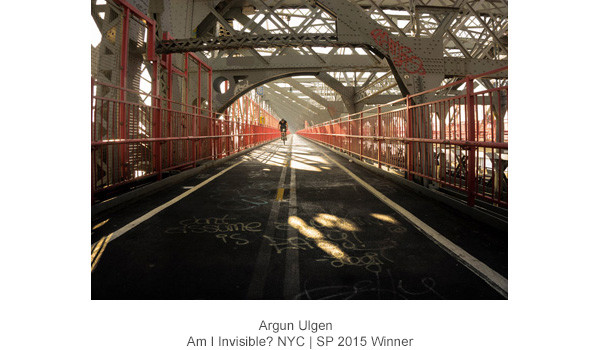
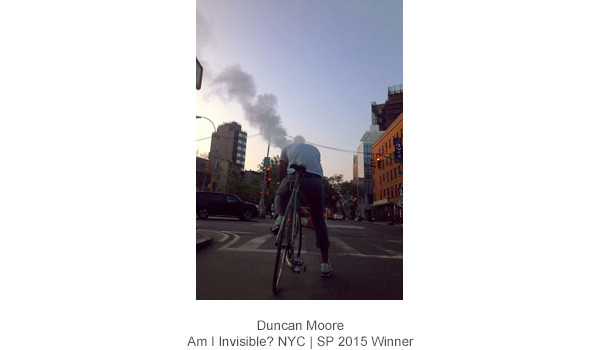
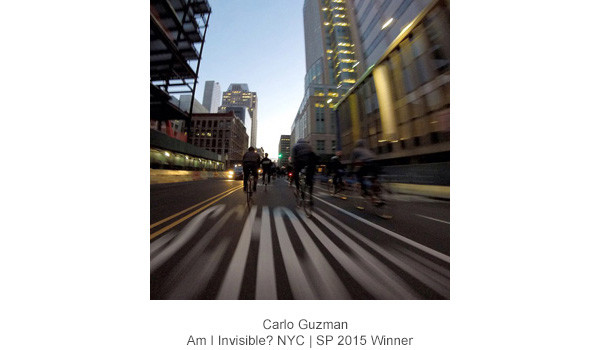
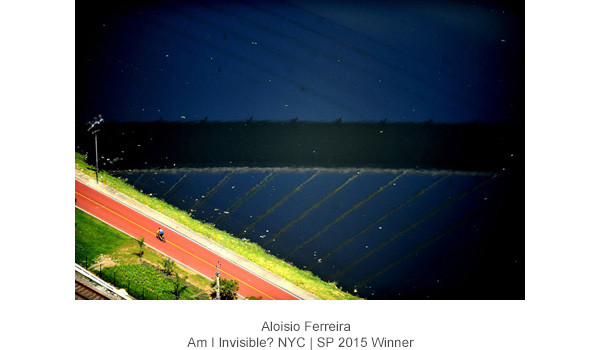
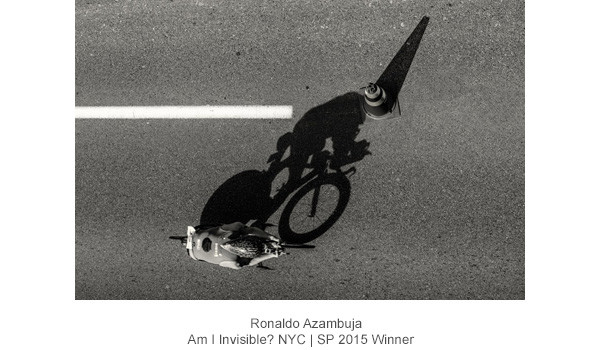
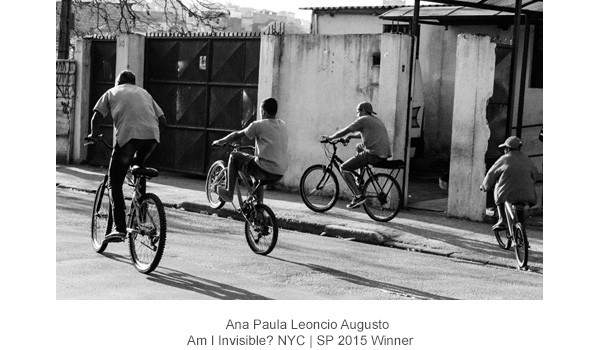
Congratulations! To the winners of the 2015 Am I Invisible? NYC | SP Open Call

Please join Bicycle Utopia and Ciclo Utopia in honoring the six recipients of the jury’s decision.

Parabéns aos vencedores do concurso Invisível? SP | NYC 2015!

Por favor, junte-se à Bicycle Utopia e à Ciclo Utopia na saudação aos seis escolhidos pelo júri.

097- Argun Ulgen

099-Duncan Moore

112-Carlo Guzman

284 Aloisio Ferreira

11113 Ronaldo Azambuja

11180 Ana Paula Leoncio Augusto
In São Paulo:
Ana Paula Leoncio Augusto
Aloisio Ferreira
Ronaldo Azambuja

In New York:
Carlo Guzman
Duncan Moore
Argun Ulgen

Many, many thanks to all who entered the Open Call. Your vision and creativity is an inspiration to everyone who envisions a “bicycle utopia” in New York and São Paulo.

We extend our heartfelt thanks to the jury panels in New York and São Paulo:

Daniele Dal Col, Director, Galeria Superfície, São Paulo

Renata Falzoni, Architect, Journalist and Bicycling Advocate, São Paulo

Zanna Gilbert, Department of Drawings at the Museum of Modern Art, New York

Elcio Ohnuma, Department Chair of Photography, Escola Panamericana de Arte, São Paulo

Karen Overton, Executive Director, Recycle-A-Bicycle, New York

Louise Weinberg, Curator, Queens Museum of Art, New York

And a big thank you to all our sponsors, without whom the Am I Invisible? NYC | SP Open Call would not be possible.

Parabéns aos vencedores do concurso Invisível? SP | NYC 2015! Por favor, junte-se à Bicycle Utopia e à Ciclo Utopia na saudação aos seis escolhidos pelo júri. Em São Paulo: Ana Paula Leoncio Augusto.jpg Aloisio Ferreira.jpg Ronaldo Azambuja.jpg Em Nova York: Carlo Guzman Duncan Moore Argun Ulgen Agradecemos muito a todos que participaram do concurso. Sua visão e criatividade são uma inspiração para todos que desejam uma “utopia ciclística” em Nova York e São Paulo. Estendemos também nossos sinceros agradecimentos aos jurados de Nova York e São Paulo: Daniele Dal Col, Diretora da Galeria Superfície, São Paulo Renata Falzoni, Arquiteta, Jornalista e Defensora do Ciclismo, São Paulo Zanna Gilbert, Departamento de Desenhos do Museu de Arte Moderna, Nova York Elcio Ohnuma, Chefe do Departamento de Fotografia, Escola Panamericana de Arte, São Paulo Karen Overton, Diretora Executiva, Recycle-A-Bicycle, Nova York Louise Weinberg, Curadora, Museu de Arte do Queens, Nova York E muito obrigado a todos os nossos patrocinadores, sem os quais o concurso Invisível? SP | NYC não seria possível.

ami nyc sp mailchimp sponsors logos-01

Am I Invisible? NYC | SP Opening Party and Awards

[tentblogger-vimeo 139376082]
JOIN US!
SEPTEMBER 15 @ 6PM
AT DELANCEY PLAZA
DELANCEY @ SUFFOLK ST
AM I INVISIBLE? NYC | SP
OPENING PARTY AND AWARDS

Join us Tuesday for the opening party of Am I Invisible? NYC | SP to find out if you are one of the six winners of the Am I Invisible? NYC | SP Open Call!
Contestants who attend are also eligible to win raffle prizes sponsored by ABUS, Thule, Nutcase Helmets, Levi’s and Lomography.
Everyone who comes will receive a surprise gift, and a chance to win a VANMOOF bicycle.

Am I Invisible? NYC | SP is an international public art project about urban mobility, bicycling, art, photography, and the city. The Am I Invisible? NYC | SP exhibition opening party will happen simultaneously in New York City and São Paulo. During the party, we’ll connect over Google Hangout with the Bicycle Utopia community in Brazil: bicyclists, artists and the people who love them.

Am I Invisible? NYC | SP features work by Ana Benaroya, Bijari, Ingrid Burrington, Jessica Findley, Garapa, Gustavo Gomes, David Horvitz, William Lamson, Joseph Michael Lopez, Felipe Russo, TEC, Hai Zhang and 6eMeia

and YOU.

website expo header-01

ami nyc sp mailchimp sponsors logos-01

What Becomes a Protected Bike Lane Most?


[tentblogger-vimeo 86721046]

A protected intersection!

O Where are you Going?

auden


‘O where are you going?’ said reader to rider,

‘That valley is fatal when furnaces burn,

Yonder’s the midden whose odors will madden,

That gap is the grave where the tall return.’


‘O do you imagine,’ said fearer to farer,

‘That dusk will delay on your path to the pass,

Your diligent looking discover the lacking

Your footsteps fell from granite to grass?’


‘O what was that bird, said horror to hearer,

‘Did you see that shape in the twisted trees?

Behind you swiftly the figure comes softly,

The spot on your skin is a shocking disease.’


‘Out of this house’–said rider to reader,

‘Yours never will’–said farer to fearer,

‘They’re looking for you’–said hearer to horror,

As he left them there, as he left them there.

cyclist

O Where are you Going?  

W.H. Auden, 1934

Brooklyn, Geniuses Everywhere

When the change of the season comes to Brooklyn, the geniuses come out;  too many to name or even count. Drinking coffee, hurrying to the subway, taking a number at the butcher’s or standing on the sidewalk, staring down at who knows what. In coffices, geniuses come and go, plugged into devices pouring into their ears the soundtracks of their lives while they write the stories of their lives. Some of these stories are in color; some are in code.

Where ships once grew, now delicious things to eat sprout from the rooftop farms of shipyards, stadiums, on 596 acres and in garages. The harvest doesn’t travel far, turning up in nearby plates in exotic or comforting combinations dished out by arms with tattoos. The names of these morels and morsels combine two languages or more, or the names of dead geniuses.

 steamboat003

There is a building on Jay Street stuffed to the rafters with geniuses making the future. If you’re one of these, and your name is Robert Fulton, and the year is 1807, as the steam rolls off your morning cup of coffee you might say to yourself, “This would be a good way to push a boat around.” At the next table, if it were 1881 and if your name is Arbuckle, the future might appear to you in the form of roasted coffee beans packed ever so neatly in one-pound bags. In either case, you would be hanging around the same corner of Jay Street that you probably are right now.

coffee cup002-01 The first genius of Brooklyn was sugar. But even before that, there was the Dutch genius, and even before that, the genius of the Lenape.
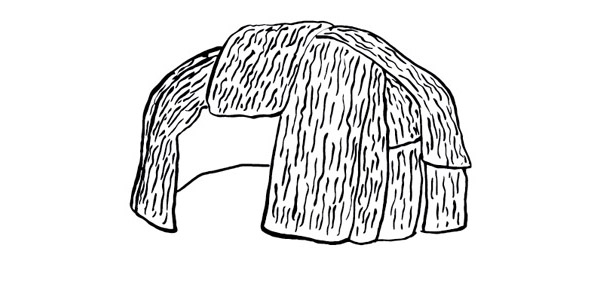
lenape house-01The Lenape’s Brooklyn was much like today: from one end to the other, an endless round of roving supper clubs where diners enjoyed only the most locally grown and seasonal of nightly feasts. In autumn, summer clambakes and fish fries in Coney Island gave way  to beaneries and bakeoffs in the fields of Gowanus.  With the first snow, the forests of Flatbush Extension smoked with barbecues of turkey and deer.

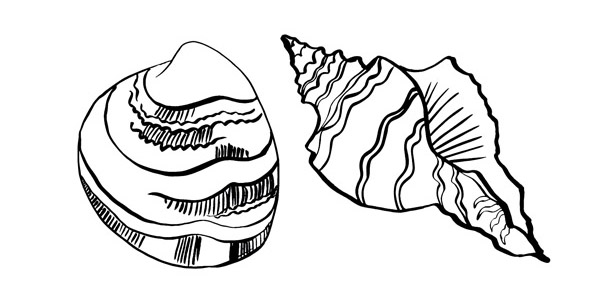
 The Lenape, in their genius, combined the lifestyle of the 1% with that of can-collecting residents of refrigerator boxes. The Lenape supper club was more like supper camp since the Lenape just set up a new house wherever dinner was to be served. They invented Bitcoin, which they called “sewan”, the only difference being that their Bitcoin was made not of one’s and zero’s contained in glowing boxes, but rather seashells mined during strolls along the sandy beaches of the wildly popular open-source operating system called Nature.

 For about 6,000 years, the scene was low-key but copacetic; one season rolling into the next much like the one before, when, one day, up floated the most unusual party boat the Lenape had ever seen. The men aboard were no less exotic, their unearthly pallor set off by dark clothes flashing with beautiful metal ornaments and, I mean, who wears a ruff?

Their boat was strewn with a collection of gadgets each one more entertaining than the last: exploding sticks that dropped a deer with one bang, steel axes and needles that cut effortlessly through wood and leather, and drinks that made your head feel first like it would burst into flames, then like it was floating 10 feet above the ground.

 The Dutch–who had been hoping to shorten the distance between Indonesian nutmeg, Japanese silver and Chinese porcelain and the docks and counting houses of London–looked with some surprise upon the Lenape and saw one thing: fur.

 For a while, the Lenape were the life of the party on both sides of the Atlantic; then the beaver, otter and mink ran out. At the same time, the value of their Bitcoin took a nosedive. To top things off, the Lenape realized they had been trading furs and sewan not only for guns and steel needles, but land.

Too late. They found themselves first in Canarsie, then Oklahoma.

Never mind that. The new genius in town was sugar. Without sugar, once New Netherlands had been emptied of fur, the Dutch would simply have sailed on to other spicier, silkier shores, and we would not now be growing on our rooftop farms the finer ingredients of the pancakes, waffles, doughnuts, coleslaw and pretzels we so enjoy at our barbecues, bean tosses and clam bakes in Greenpoint and Boswijk.
clam and quahog shells-01 War, war, war. European kings and queens, like so many Islamic fundamentalists and Neo-Cons, couldn’t get enough of it. Trying to escape the misery of the Seven Years War, the Thirty Years War, the War of the Roses not to mention the Hundred Years War, a flood of terrorized farmers fled hither and thither across blood-soaked France, Belgium, and Spain to England, from England to Scotland and back again. Where to go, where to hide?

If you could make it to Amsterdam, the Dutch West Indies Company was giving anyone willing to cross over the Atlantic a six-year lease on a Brooklyn homestead, equipped with house, barn, tools and farming implements, four horses, four cows, sheep and pigs, in exchange for nothing more than a promise to stay for six years and the return of one cow, 80 pounds of butter and $40 annually. French Huguenots, Calvinist Walloons, Palatinate Germans, Austrians, Danes, Swedes, Norwegians, Poles and Jews everywhere said, “Sign me up!”
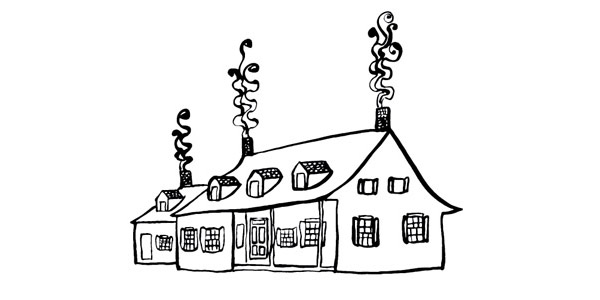
dutch farmhouse003-01Thusly, in the matter of its glot, that of Brooklyn has always been markedly poly, the speakers of 18 languages turning up all at once with a few sewing needles and one suit of clothes, keen to plow the fields of Red Hook.
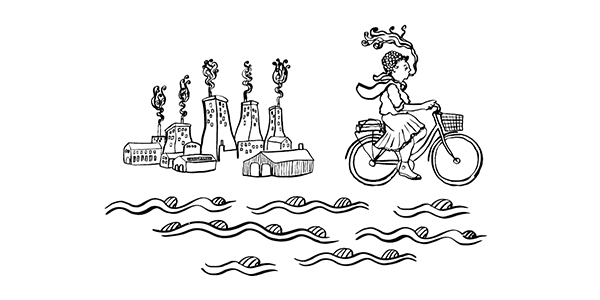
alice sugar + smoke-01Sugar was the dot-com boom, the Colombian cocaine trade, the subprime mortgage bubble of the 17th century. It combined the irrational exuberance and insatiable demand of the first two with new innovations in cruelty of the third.  Everybody wanted in, and adventurers from Denmark to Spain flocked to the Caribbean to get their piece of the smokiest, stickiest, tooth-rottingest get-rich-quick deal ever produced of pure human misery.

Once every inch of land between Florida and Brazil was covered with undulating fields of sugar cane, there remained the problem to feed, clothe and shelter the humans planting, harvesting and cracking the whip over it. The farms and forests of Brooklyn and Queens furnished the needed supplies. After the Molasses Act of 1733, the sending out of lumber and wheat, the taking in of barrels of molasses and lemons, limes, ginger, people and whatever else smugglers, pirates and other astute men of business, extract from the Caribbean to sell in London by way of New York transformed a street next to a wall into Wall Street.

Brooklyn settled down into a bucolic, homey kind of existence populated by farmers and woodcutters, brewers and distillers, herders and hunters, coffee drinkers and other inventors of the future–a place where one might turn one’s attention, uninterrupted by anything more disturbing than a ferry trip across the river to replenish the cigarette supply–to such pleasant pastimes as the decoding of the Rosetta Stone or the invention of free verse.

walt truman fultonlanding-01

 A minor genius, the Salieri to the Mozart that was sugar, was the Revolutionary War, during which New Yorkers–occupied by the British–continued to buy and sell, grow and trade, and especially,under the protection of the British fleet, come and go, rather than dragging cannons over one snowy mountain after another, feet covered with bloody rags. Among those coming were Africans slaves running from the freedom fighters, promised their freedom if only they would fight on the British side against their former owners. Although recognizing the distinct usefulness of a few slaves around the house, the store and the workshop, New Yorkers were disgusted by the vulgarity of owning dozens if not hundreds of slaves that characterized the plantation slavery system, which, perfected in the cane fields of the Caribbean,  proved so profitable in the cotton fields of the nascent democracy.

They also had  few objections to the purchase or inheritance of freedom, nor to worship nor literacy, baptism, or the owning of property on the part of African slaves from the time of the first Dutch settlers. By 1818, the Bridge Street African Methodist Episcopal Wesleyan Church had been founded on Bridge Street by blacks fed up with sitting in the back rows of white churches.

And this is how greatest American genius of all, contradiction, came to Brooklyn.

genius brochette-01

Ana Benaroya at ArtCrank

a_benaroya_artcrank

We loved Ana Benaroya’s poster at ArtCrank this year. “I wanted to create a raw, powerful image of a woman riding a bike nude. She and the bike are one and they are rebellious, powerful and free.”

Ana’s work merits a Buzzfeed listicle, 8 Life Hacks Every Woman Should Know, excerpt from her forthcoming book 120 Ways to Annoy Your Mother (And Influence People).

Stay moist and go slow.

ana benaroya how to moisturize - 600x521


Dinner and Bikes with Elly Blue June 2!

Join us for Dinner and Bikes with Elly Blue, Joshua Ploeg and Joe Biel at the Old Stone House on June 2 at 7 PM.

A vegan feast under the trees and an evening of music, movies, and conversation with Elly Blue about her new book, Bikenomics: How Biking Can Save the Economy.


bikenomics-cover-web

Dinner and Bikes is the closing event for Am I Invisible? A Portrait of New York City, an exhibition at the Old Stone House that celebrates the style and diversity of New York City Bicyclists. Every ticket sold is entered into a raffle to win a Brooklyn Bicycle Co. Willow 3-speed or a Van Moof bike.

brooklynutopias8
photo credit: Hyperallergic

About Elly Blue: Elly Blue lives in Portland, Oregon and has been writing about bicycle transportation since 2006. Her work has appeared in the Guardian, Bicycling, Grist Bitch, BikePortland, Momentum and elsewhere. Elly Blue is the author of Everyday Bicycling (2012) and Bikenomics: How Bicycling Can Save the Economy (2013). Elly Blue Publishing is an independent publisher and distributor with a focus on feminist nonfiction about bicycling. EBP publishes the quarterly zine Taking the Lane and a growing number of traditional-format books. More information here.

About chef Joshua Ploeg: Let us not understate the might and magic of Joshua Ploeg’s cooking. The dude’s meals sparkle in your mouth; they burst and bloom; they explode and breakdance and pirouette! Former singer for Lords of Lightspeed, Behead the Prophet, and the Mulkiteo Faeries, Joshua Ploeg, the “traveling vegan chef” is author of In Search of Lost Taste, So Raw It’s Downright Filthy and This Ain’t No Picnic. More information about Joshua here

About Joe Biel: Writer, designer, filmmaker, activist and founder of Microcosm Publishing, Joe Biel will be showing The Greatest Gift, his new 15 minute documentary about Emily Finch, the Portland mom who bikes around with her 6 kids.More about Joe here

Come for dinner, leave with a bike!

Every ticket sold for Dinner and Bikes is entered into a raffle to win a Brooklyn Cruiser or a Van Moof bike. A portion of the proceeds are donated to Recycle-A-Bicycle.

Dinner and Bikes is sponsored by ABUS, Rolling Orange Bikes and Brooklyn Bicycle Co. 

bikes


dinner-and-bikes-sponsors-01600px

Am I Invisible? A Portrait of New York City Bicyclists Opens April 8

Untitled (Ghost Biker) Marina Berio
Am I Invisible? A Portrait of New York City Bicyclists

Opening April 8, 2014 6 – 9 p.m.

In the Great Room at The Old Stone House
Old Stone House & Washington Park
336 Third Street, bet. 4th/5th Avenues
Brooklyn, NY 11215

Directions

Am I Invisible? A Portrait of New York City Bicyclists is a transmedia project produced by Bicycle Utopia in collaboration with Recycle-a-Bicycle and The Old Stone House.

Am I Invisible? is a portrait of New York City viewed from a bicycling perspective. Artists Marina Berio, Christopher Cardinale, Jeanne Hilary, Johanna Kindvall, Sam Polcer, Justin Strauss Mike Taylor and Harry Zernike will be exhibited along with images from the Am I Invisible? Open Call, and images created during an Am I Invisible? Bike Art Party, a community event organized with Queens Museum. Am I Invisible? A Portrait of New York City Bicyclists will be on display at the Old Stone House and an interactive public art installation in locations around NYC from April 8 to June 3.

Am I Invisible? is inspired by the experience of biking in the city. Biking creates intimacy with the built environment, encourages social interactions and enhances awareness of New York City as an ever-evolving, collective cultural experience.

About the Artists

Marina Berio

Marina Berio is an artist and photographer. She has been granted a New York Foundation for the Arts fellowship, the Aaron Siskind Foundation Award and a Pollock/Krasner Grant, and been invited to various residencies including the MacDowell Colony, Yaddo, Millay, and Schloss Plüschow in Germany. She has exhibited photography and drawings internationally, including Michael Steinberg Fine Arts, Yancey Richardson Gallery, Von Lintel Gallery, Smack Mellon, and Artists Space in New York; Les Rencontres d’Arles, Galerie Camera Obscura, and the Centre Photographique de Pontault-Combault in France; her work has been published in Foam and Fantom. Berio is Chair of the General Studies Program at the International Center of Photography in New York City. She lives with photographer Jean-Christian Bourcart and their son Elio in Brooklyn, New York. More about Marina’s work at marinaberio.net

Christopher Cardinale

Christopher Cardinale is a cartoonist and muralist. While living in Guatemala and Mexico, his work was inspired by encampments of striking workers and anarchist punk collectives. He has been publishing comics since 2001 when his first graphic narrative appeared in World War 3 Illustrated Magazine. Since 1996, Christopher has led large-scale, collaborative mural projects in New Mexico, New York City, Italy, Greece and Mexico.His work addresses themes ranging from labor organizing history, cyclist and pedestrian rights, urban environmentalism and post-Katrina New Orleans. Christopher illustrated the graphic novel, Mr Mendoza’s Painbrush, by Luis Alberto Urrea, chosen by Kirkus Reviews as one of 2010’s best books for teens.

Johanna Kindvall

Johanna Kindvall is a designer, illustrator and architect based in Sweden and New York City. She editss a food blog, kokblog; her illustrations appeared in The Culinary Cyclist, by Anna Brones. Her illustrations have been published on blogs such as Art of Eating, Foodie Bugle and the books The Fabulous Baker Brothers. She is currently at work on a cookbook in collaboration with Anna Brones, which will be published by 10 speed press. Her work has been exhibited widely, notably in 14th St Overlay by Walczak & Heiss in Denver, Colorado, at the Triennial of Lövestad, Sweden, at the National Art Museum of China and others.

alex06_600-bw

Jeanne Hilary

Jeanne Hilary is a photographer and new media artist.  She is founder of Bicycle Utopia, a public art project about New York City seen from a bicycling perspective.

Her work has been exhibited widely, notably le Centre Pompidou, le Palais de Tokyo, Le Musée Carnavalet, la Bibliothèque Nationale, Paris; Lilit Kala Akademi, New Delhi, The Museum of Fine Arts, Calcutta,, the Museum for Contemporary Photography, Chicago. She has received numerous grants and residencies, among these: The American Center, Paris; the Fondation Regional Pour l’Art Contemporain, Ile de France; the Ministére des Affaires Etrangéres, France; the Palm Beach County Cultural Council; the Ministére de la Culture, France. Her work has been published in  The New York Times, The Guardian, La Repubblica, El Pais, Le Monde, Libération, le Nouvel Observateur, l’Express, Geo, Newsweek, Fortune and many others. Her work is broadly concerned with how the built environment impacts human endeavor, and how memory and desire inform contemporary society. She has worked extensively on gangs and youth issues in Chicago and Los Angeles,  women’s issues, infrastructure and housing, poverty and immigration in France’s housing estates, and a range of human rights and social issues in Egypt, Afghanistan, India, Turkey, China and Rwanda, throughout Europe and the United States. More about Jeanne Hilary at jeannehilary.com

Sam Polcer

Sam Polcer recently recently completed his first book, New York Bike Style, which will be published by Prestel in Spring 2014. (He also has a blog, Preferred Mode, that features some of the photos from that project.) His writing and photography has appeared in The New York TimesThe Wall Street JournalTravel + LeisureHemispheresBrooklyn MagazineThe L Magazine,  among others. He is Communications Manager of Bike New York. Previously, he was a nightclub visual designer, traveling circus spotlight operator, documentary filmmaker, DJ, video editor, blueberry picker, election campaigner and event producer. When he’s not riding his bike or traveling on assignment, he spends as much time as he can in Brooklyn, NY. More about Sam Polcer at Preferredmode.com

strauss

Justin Strauss

Justin Strauss, 16, from Forest Hills, Queens is a junior at Stuyvesant High School. Justin is photo editor for both The Spectator, Stuyvesant’s student run biweekly newspaper, and The Indicator, Stuyvesant’s yearbook. His interest in cycling began in 2012, after participating in bike tours in and around New York City. The following year, Justin joined the Century Road Club Association. He competes in road, track, and cyclocross races for the club’s Junior Development team. Justin saw the opportunity to combine his two defining interests in Bicycle Utopia’s Am I Invisible? contest and he plans to continue to experiment with using photography as a medium to capture the beauty of cycling.

Mike Taylor

Mike Taylor is a printmaker, painter, writer, self-publisher and arts educator. He works in screenprinting, painting, collage, sculpture and performance. His work is narrative and autobiographical, documenting his surroundings and reflecting on culture, politics, and the human condition. While self-publishing anthologies of his own artwork, comics and writing he is also an elementary school art teacher. 

Harry Zernike

Harry Zernike makes photographs and films for a broad range of commercial and editorial clients. His photographs are in a number of books as well as private, corporate, and museum collections. He has been spotted in road and cyclocross races, and toodling around New York on a single speed. A predisposition to photographing cyclists (conflating work and play) led him to publish the printed 9W- a journal of Cycling Photography and it’s online companion 9wmag.comwww.harryzernike.com

triple logos-01 copy

Am I Invisible? A Portrait of New York City Bicyclists is made possible with generous support from our sponsors.

AdoramaPix600

sponsors 600

A Bikestrian

bikestrian


This just in from artist Frédéric Lère:

“You could not miss me.

“Walking a Citibike from the art supply store to my studio. Should I use the sidewalk or the bike lane? I opted for the bike lane, smoother surface.

“All the way up 8th Avenue from 23rd to 38th Street. Respecting all the traffic lights and unruly pedestrians…

“I was special, a bikestrian.

“One of the unruly persons that I met was driving a Yellow cab. He cut me off, forcing me to use my brakes, as he turned left on 35th Street, running a red light.

“The driver was a cop in a uniform!?!”

You can see Frédéric’s The Freevolous King Lère Show at the Mayson Gallery, 254 Broome Street, New York, from January 22 to February 05.

Proceeds from the show benefit the Big Apple Circus Clown Care Unit.